


Introduction
A clean and functional kitchen is not just about modern appliances or stylish countertops—it is about how efficiently your space is organized. One of the most overlooked yet essential aspects of kitchen management is drawer organization. When people search for how to organize kitchen drawers, they are often looking for a long-term solution to clutter, confusion, and wasted time in the kitchen.
Kitchen drawers tend to become dumping grounds for random utensils, mismatched tools, and items we rarely use. Over time, this chaos builds up and makes everyday cooking stressful. Learning how to organize kitchen drawers is not just about tidiness; it is about creating a system that supports your cooking habits, saves time, and reduces mental load.
This detailed guide will walk you through everything you need to know—from decluttering and categorizing to advanced storage systems and long-term maintenance strategies. By the end, you will have a complete understanding of how to transform messy drawers into a highly efficient kitchen setup.
Step-by-Step Guide on How to Organize Kitchen Drawers
1. Start with a Complete Emptying Process
The first step in understanding how to organize kitchen drawers is to completely empty every drawer in your kitchen. This might seem overwhelming, but it is essential for a fresh start. When everything is removed, you gain a clear visual understanding of what you actually own.
Place all items on a countertop or table and group them loosely. This allows you to identify clutter patterns, duplicate items, and tools you no longer use. Without this step, organizing becomes surface-level and temporary.
Cleaning the empty drawers is equally important. Wipe them thoroughly to remove dust, crumbs, or grease buildup. A clean foundation ensures that your system lasts longer and remains hygienic.
2. Decluttering and Smart Categorization
Once everything is out, the next phase of how to organize kitchen drawers involves ruthless but practical decluttering. Ask yourself whether each item is used frequently, occasionally, or never.
Sort items into categories such as:
- Daily cooking utensils
- Baking tools
- Serving equipment
- Specialty gadgets
- Unused or duplicate items
Discarding or donating unused tools is critical. Many kitchens suffer from overcrowding simply because items are kept “just in case.” Removing unnecessary clutter immediately improves functionality and space availability.
3. Group Items by Function and Frequency
After decluttering, the next step in how to organize kitchen drawers is grouping items based on how often they are used. This is one of the most effective long-term strategies.
Place everyday items like spoons, forks, and knives in the most accessible drawer. Less frequently used items such as cake molds or special utensils should be stored in lower or secondary drawers.
This system ensures that your kitchen workflow becomes intuitive. You no longer need to search for tools, which significantly reduces cooking time and frustration.
4. Assign Zones for Maximum Efficiency
Zoning is a powerful method when mastering how to organize kitchen drawers. Each drawer should serve a specific purpose.
For example:
- Cooking zone near the stove
- Prep zone near the countertop
- Dining zone near the table
- Storage zone for specialty items
This zoning strategy creates a natural flow in your kitchen. Instead of thinking about where things are, your hands automatically know where to go.
Deep Dive into Drawer Types and Their Organization
Different drawers serve different purposes, and organizing them correctly is key.
Cutlery Drawer
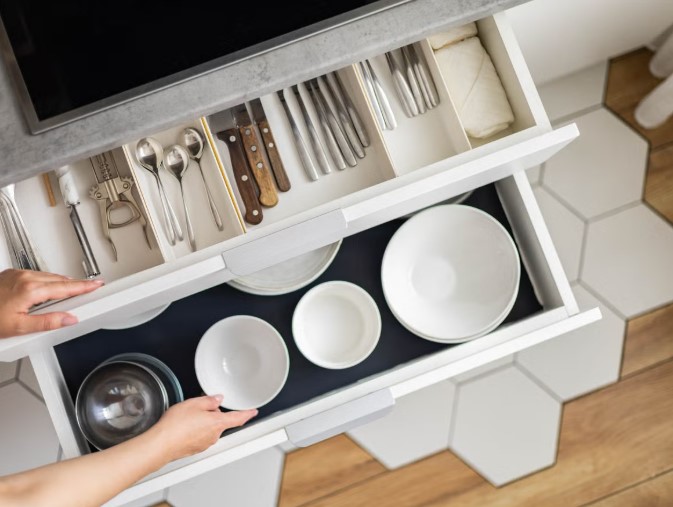
This is the most frequently used drawer. Use structured trays to separate forks, spoons, and knives. Avoid mixing categories to maintain cleanliness and efficiency.
Utensil Drawer
This drawer holds larger tools such as spatulas, ladles, and whisks. Vertical dividers can help prevent clutter and overlapping.
Junk Drawer
Every kitchen has one, but it should not be chaotic. Limit this drawer to essential miscellaneous items like batteries, scissors, or tape. Use small containers for structure.
Spice or Ingredient Drawer
Organize spices in labeled jars. Arrange them alphabetically or based on cooking frequency for faster access.
Essential Tools for Better Organization
Understanding how to organize kitchen drawers is incomplete without the right tools. Proper organizers can completely transform your storage system.
| Tool Type | Purpose | Benefit |
|---|---|---|
| Drawer Dividers | Separate items | Prevents mixing and clutter |
| Cutlery Trays | Organize eating utensils | Quick and easy access |
| Adjustable Inserts | Flexible organization | Fits different drawer sizes |
| Small Containers | Store tiny items | Improves categorization |
| Non-Slip Liners | Stabilize items | Keeps everything in place |
Using these tools ensures that your system remains structured even with daily use.
Advanced Storage Strategies
Taking how to organize kitchen drawers to the next level involves advanced storage techniques.
Vertical Storage Optimization
Instead of laying everything flat, store items vertically where possible. This is ideal for trays, lids, and cutting boards.
Layered Storage Systems
Use stackable trays or multi-level organizers to maximize depth in deeper drawers.
Hidden Compartments
Some modern organizers include hidden sections that provide additional storage without increasing clutter.
Minimalist Approach
Reduce the number of tools you keep. Fewer items automatically make organization easier and more efficient.
Maintenance System for Long-Term Order
A major part of how to organize kitchen drawers is maintaining the system over time. Without maintenance, even the best organization collapses.
Regular habits include:
- Weekly quick resets of drawers
- Monthly decluttering checks
- Returning items immediately after use
- Avoiding unnecessary purchases
Consistency ensures that your kitchen remains functional and clutter-free.
Common Mistakes to Avoid
Even with good intentions, many people make mistakes when learning how to organize kitchen drawers:
- Overfilling drawers with too many items
- Ignoring categorization principles
- Mixing unrelated tools
- Not using dividers or organizers
- Failing to maintain the system
Avoiding these mistakes ensures long-term success and reduces frustration.
Professional Organizer Insights
Experts in home organization emphasize that how to organize kitchen drawers is less about perfection and more about usability. A drawer should be designed based on your cooking behavior, not aesthetics alone.
Professionals also recommend the “one-touch rule,” where every item should be usable without moving multiple objects. This improves efficiency and reduces time waste.
Family-Friendly Kitchen Systems
If multiple people use the kitchen, organization must be intuitive. Assign specific drawers or sections for each category of user needs.
Teach all household members the system so that maintenance becomes a shared responsibility. This prevents clutter from building up again.
Seasonal Reorganization Strategy
A smart approach to how to organize kitchen drawers includes seasonal adjustments. For example:
- Summer: lighter cooking tools accessible
- Winter: baking tools more visible
- Festive seasons: special cookware prioritized
This adaptive system ensures that your kitchen remains relevant throughout the year.
Psychological Benefits of Organized Drawers
An organized kitchen has a direct impact on mental well-being. When you understand how to organize kitchen drawers, you reduce cognitive overload.
Clutter-free spaces promote:
- Better focus
- Reduced stress
- Increased cooking enjoyment
- Faster decision-making
A clean drawer may seem small, but its psychological effect is significant.
Smart Layout Planning
Drawer placement matters as much as organization. Keep frequently used drawers within arm’s reach of cooking areas. This reduces unnecessary movement and increases efficiency.
Conclusion
Mastering how to organize kitchen drawers is one of the most valuable skills for creating a functional kitchen. It goes far beyond simple tidiness—it is about designing a system that supports your daily lifestyle.
By decluttering, categorizing, using the right tools, and maintaining consistency, you can transform even the most chaotic kitchen into a highly efficient space. The key is to build habits that are sustainable rather than temporary fixes.
When you apply the strategies outlined in this guide, your kitchen becomes easier to use, easier to clean, and far more enjoyable. Ultimately, learning how to organize kitchen drawers helps you save time, reduce stress, and create a more peaceful home environment where everything has its place.
Read More:- How to Deep Clean Kitchen for a Spotless and Hygienic Home